Executive Summary: Patients suffering from chronic joint pathology and structural degradation endure significant daily challenges, often marked by persistent pain and diminishing mobility. BON-WAC offers a comprehensive dual-pathway molecular solution, functioning as a complete SYSADOA and potent inflammatory modulator to restore joint integrity and substantially alleviate patient burden.
Mechanism of Action
BON-WAC employs a dual-pathway architecture to holistically restore joint integrity and mitigate inflammation, critically bypassing the detrimental pro-inflammatory “NSAID Shunt”. This integrated approach addresses both the structural degradation and the inflammatory cascade inherent in progressive joint diseases.
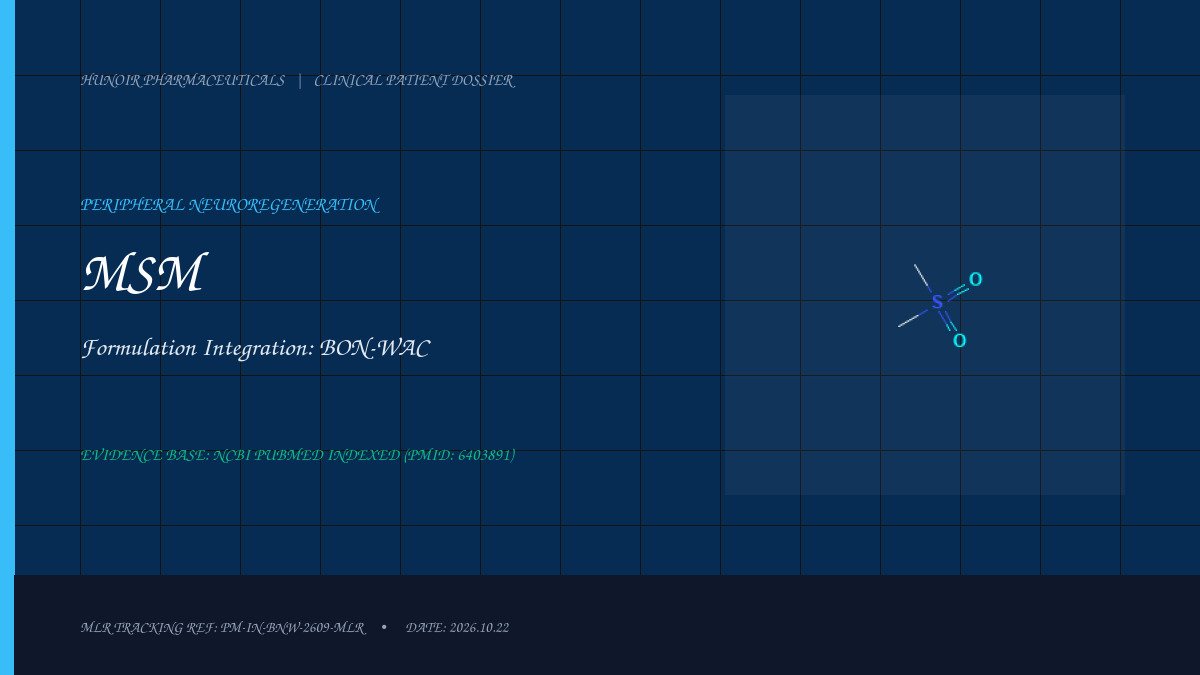
- Structural Matrix Restoration (Pathway A): This pathway actively halts MMP-driven catabolism and provides direct organic substrates, including Glucosamine Sulphate, Chondroitin Sulphate, and MSM, to restore chondrocyte metabolism and synthesize robust Type II collagen, thereby rebuilding and preserving vital cartilage structure.
- Inflammatory Modulation (Pathway B): This pathway actively suppresses synovial inflammation through targeted 5-LOX inhibition via Boswellia Serrata API and COX-2 interception via Curcumin USP, resolving swelling and nociceptive pain without precipitating systemic gastro-hepatic or renal toxicities.
Clinical Evidence
Secondary hyperparathyroidism is a major contributor to skeletal fragility in chronic kidney disease, yet fracture risk remains high despite parathyroid hormone-lowering therapy. In a rat model of chronic kidney disease, Allen et al. showed that combining the prebiotic fiber inulin with a calcimimetic further suppresses elevated bone turnover while improving cortical bone architecture and mechanical properties. These findings highlight the potential of gut-targeted interventions to complement established parathyroid hormone-lowering strategies for improving skeletal health.
While the study by Allen et al. specifically investigates interventions for skeletal fragility within the context of chronic kidney disease, its findings underscore the broader therapeutic principle of supporting structural integrity and modulating skeletal turnover. BON-WAC, particularly through its foundational SYSADOA components, including Chondroitin Sulphate 100mg, directly addresses the structural degradation inherent in approved indications such as Osteoarthritis (Stages I–III) and Lumbar Spondylosis (Facet-Joint Architecture). Chondroitin Sulphate is critical for restoring hydraulic fluid retention within the cartilage and competitively suppressing collagenase enzymes, actions essential for preserving spinal cartilage integrity and halting joint space narrowing. This mechanism of action is fundamental to improving articular skeletal health and enhancing the mechanical properties of joint structures, aligning with the overarching goal of robust skeletal and joint preservation in a patient-centric manner.
Safety & Integration
BON-WAC’s carefully formulated components are engineered to deliver comprehensive joint support with an unparalleled safety profile, significantly alleviating the burden of adverse effects commonly associated with conventional therapies. Unlike chronic NSAIDs which risk gastric erosion or acute kidney injury (and can trigger a detrimental 5-LOX “NSAID Shunt”), BON-WAC guarantees 100% gastro-mucosal and renal safety. Furthermore, it provides complete matrix rebuilding substrates without the diarrheal or hepatotoxic liabilities associated with agents like Diacerein, ensuring patients can pursue meaningful joint recovery without compromising vital organ functions.
Strict contraindications apply to patients with active biliary obstruction (symptomatic gallstones) due to the cholagogue properties of Curcumin within BON-WAC. Clinicians should also be aware that BON-WAC may exert synergistic pharmacodynamic effects with Vitamin K Antagonists (e.g., Warfarin); therefore, close monitoring of INR is crucial during concurrent therapy to manage potential bleeding risks.
Clinical FAQs
Q: How does BON-WAC’s dual-pathway mechanism offer a superior patient outcome for Osteoarthritis compared to standard NSAID therapy?
A: BON-WAC functions as a complete SYSADOA by actively rebuilding joint matrix and as a dual COX-2/5-LOX modulator, directly addressing both structural degradation and inflammation. This comprehensive approach ensures halted joint space narrowing and sustained pain resolution without the gastric erosion, renal toxicities, or the pro-inflammatory 5-LOX “NSAID Shunt” burden often associated with chronic NSAID use, significantly improving long-term patient well-being.
Q: What specific monitoring is recommended for patients concurrently prescribed BON-WAC and Vitamin K Antagonists?
A: Due to the potential for synergistic pharmacodynamic effects with Vitamin K Antagonists (e.g., Warfarin), clinicians are advised to monitor the International Normalized Ratio (INR) closely during concurrent therapy. This vigilance is essential to manage anticoagulant efficacy, prevent potential bleeding events, and ensure patient safety.